 Write a Review
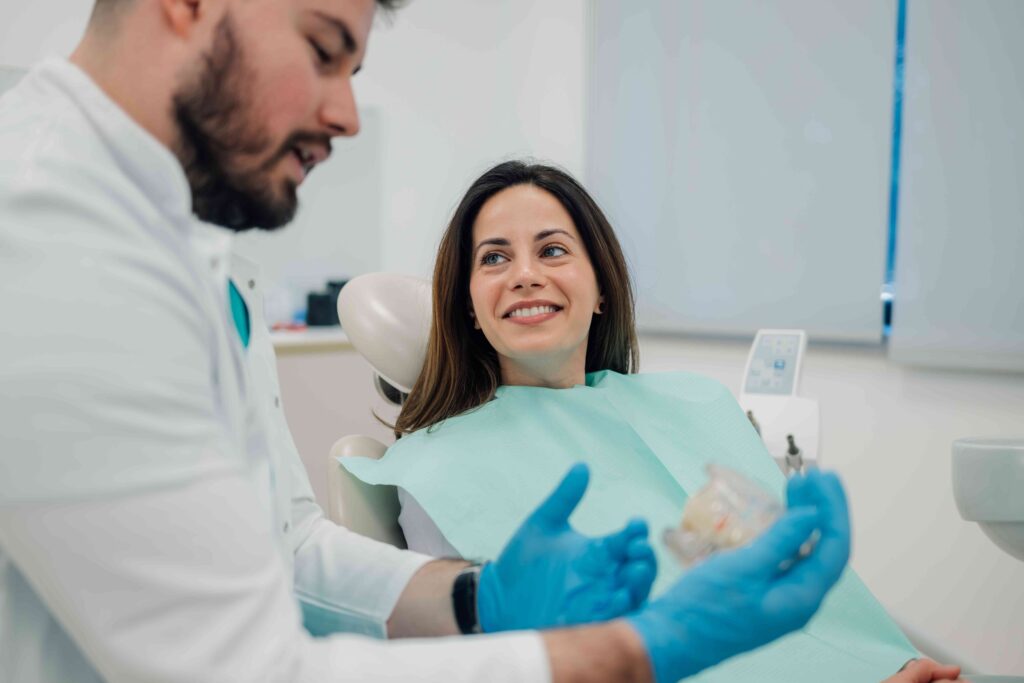
Dentures are a life-changing tooth replacement option for those who are missing several, most of, or all of your teeth. However, when you first get your dentures, there is a bit of an adjustment period where you will get used to your new restoration. During this time, you may find it challenging to speak as you normally would because there is something new in your mouth. Read on to learn some tips that can help you adjust to speaking with your new teeth.
Repeat Difficult Sounds and Words
After you have new dentures fitted, there might be some words that you find difficult to pronounce. The good news is that this is temporary and with a little bit of practice, you don’t have any trouble with these sounds. Try practicing by repeating and elongating words and phrases that you find challenging. The letters “S” and “F” tend to be the most difficult for patients to get used to. Practice makes perfect.
Read Aloud to Yourself
Some people are nervous to speak now that they have a new prosthetic in their mouth. Reading aloud to yourself can help you become more comfortable speaking with your dentures. Try reading the daily newspaper or book out loud to yourself. Looking in the mirror can also help by allowing you to see your speech pattern. This way, you will be back speaking to others with confidence in just a matter of time.
Speak with a Close Friend or Family Member
Talking with close friends or family members is a great way to improve your enunciation. They can help you identify which words you are struggling with, and you can practice without worrying about being judged or becoming embarrassed.
Maintain a Normal Volume
You may feel like you are speaking louder than usual when you start speaking with dentures. This is because dentures alter the way that sound travels from your mouth. Keep in mind that others are less likely to notice this, and you will sound more natural over time. Just keep speaking at the normal volume that feels comfortable to you.
Use Denture Adhesive
Some patients find that using a denture adhesive helps. Using a denture adhesive can help to secure your dentures, therefore making it easier to speak clearly. Remember to bite and swallow before speaking to ensure that your restoration is sitting perfectly in position.
Speaking with dentures may be frustrating at first, but you will be speaking like you used to, or even better, in no time! A little bit of practice goes a long way!
About the Author
Dr. E. Charles Beliveau earned his dental doctorate from the University of Maryland School of Dentistry. Since then, he has been committed to continuing education to keep his knowledge and skills sharp. Currently, he is a proud member of the American Dental Association, Massachusetts Dental Society, and SPEAR Education. To learn more about dentures or to schedule an appointment, visit his website or call (978) 687-5900.